The Dark Divine by Bree Despain: A Psychological and Spiritual Analysis
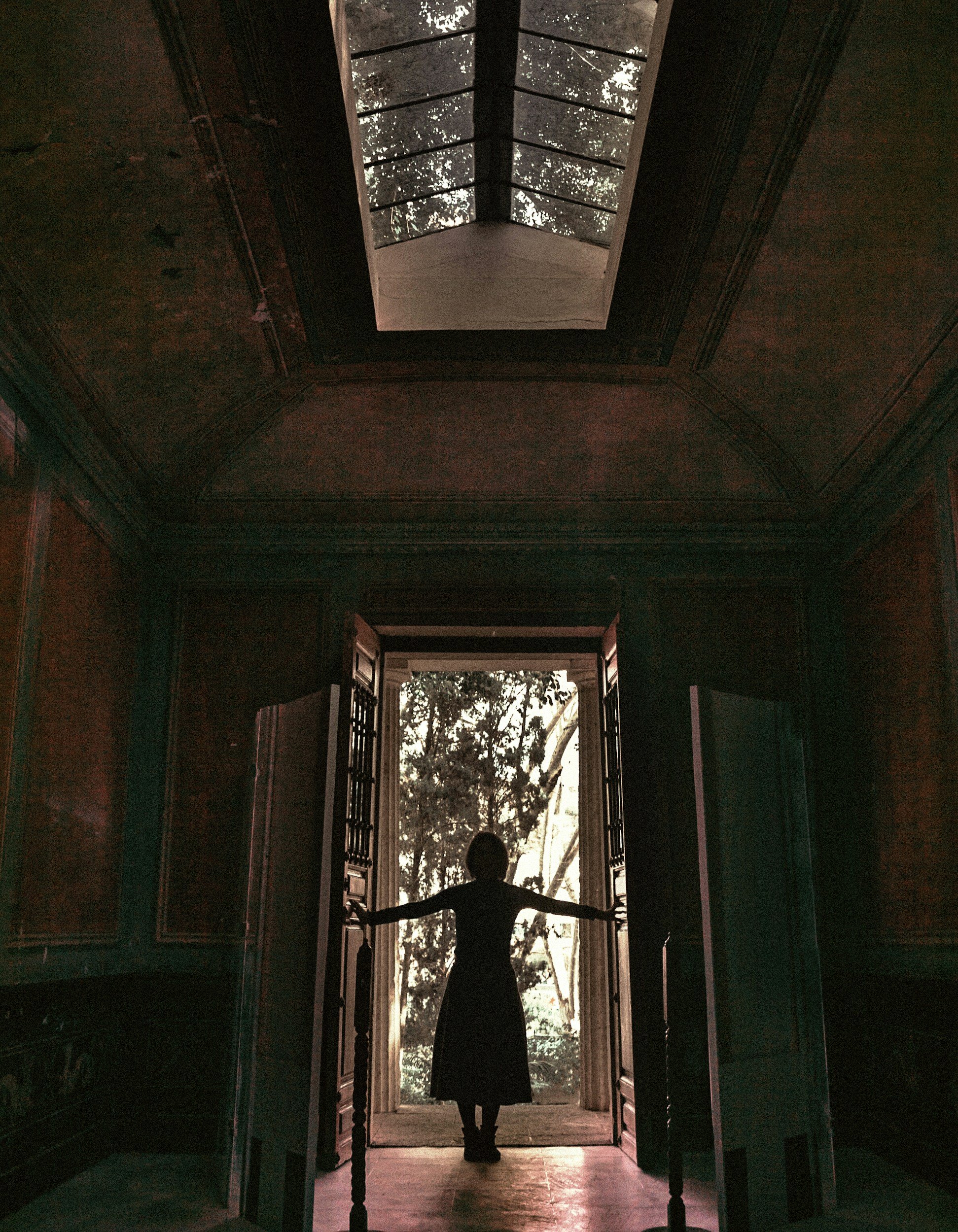
The Doorway to the Book
Something I truly believe is that some stories aren’t simply meant to just entertain you. They are meant to expose you.
They were written to wave banners of iridescent colors in your face so that you are pulled into them – hypnotized even.
But… as they slip beneath your defenses, they then begin to illuminate the places where faith, longing, and inherited loyalties collide.
A very intimate corner of your mind you might purposely choose not to visit.
The Dark Divine is one of those stories.
Published December 22, 2009, Bree Despain’s novel follows Grace Divine, daughter of a pastor and lifelong “good girl,” raised inside a world of moral clarity and quiet – but shrill – expectations.
She carries her family’s reputation like a mantle she never asked to bare but must.
And when Daniel Kalbi – the boy who disappeared under a cloud of secrets – returns, Grace, our “good girl,” is pulled into a world where truth is rarely considerable, desire is dangerous, and her faith is tested in the shadows.
Genre as YA Fiction, the book blends supernatural lore with emotional realism, creating an atmosphere where every choice feels like a crossroads and everywhere you look is a wall of Seran wrap that can easily be seen through and just as easily be torn down.
That’s where the deeper message begins to reveal itself and that’s where everything above begins to unravel.

What the Story is Really Saying & Why I Love it
At its heart, The Dark Divine is a story about the cost of goodness, the weight of inherited morality, and the tension between desire and duty.
It invites us to explore the question of what happens when the faith you have inherited no longer fits the life you’re living or desire and what you do when the truth you uncover threatens everything you were taught to protect.
Family secrets, am I right? We all have them.
But this book doesn’t glorify darkness per say.
It dignifies that parts of us shaped in it. The parts most of us are ashamed to see.
This is why it stayed with me.
It had language to things I felt long before I could articulate them:
· The pressure to be good
· The fear of disappointing your family
· The quiet strength of a mother who holds everything together even as she sees it falling apart
· and the pull toward someone who feels like both danger and destiny.
That’s why I just had to write this review.
Because even after 16 years this story and the characters have still surfaced from the depths of my mind time and time again.
And the best way to understand what they are saying to me now is to look at what the message is of the people who carried it then.
Character Dissection – The Psychological Core
Every character in this story served a purpose. Of course they do. Otherwise, they wouldn’t really be in the book.
But in this section, I’d like to pull particular characters that gripped my interest. Characters with profound messages and internal suffering that I can interpret on a psychological basis.
A kind of unraveling that reveals a truth that many of us can empathize with and many of us can relate to.
Starting with Grace.

Grace Divine – The Good Girl Who Can’t Breathe
If you’re someone who visits my website regularly then I know this girl is you.
The one who’s been a “good girl” all her life. From putting others before yourself to keeping your image picture perfect.
We cannot come undone or else the people we love will suffer.
Or so we think.
You, like Grace, are at a crossroads right now.
Suffering from identity pressure.
Raised to be obedient, selfless, and endlessly accommodating, she equates goodness with worthiness.
This in turn has an eeeexcellent way of creating guilt, self-suppression, and a fear of disappointing anyone she or we love.
And this shows in the way she is over functioning, over apologizing for her needs, and sacrificing her truth for the sake of harmony.
The reason I pulled her is because many of us know this ache.
Many of us suffer from this problem and many of us have also made it over to the other side.
We’ve been the daughters who held the family together, the women praised for being “strong” when in reality we were actually exhausted.
Over the years I’ve grown a silent resentment for being praised for being “strong.”
It’s quite annoying.
I never wanted to be strong and inheriting this moral became more than a dilemma in my life.
It became my downfall.
Grace’s suffering mirrors the quiet suffocation of anyone who has ever been loved for their compliance rather than their truth.
Daniel Kalbi – The Boy Who Believes He’s the Monster
More than one of us has loved a Daniel.
Someone who couldn’t receive love because they didn’t believe they deserved it.
Daniel’s suffering begins with abandonment trauma and the belief that he is inherently dangerous.
His werewolf curse becomes a metaphor for self-hatred – the fear that his darkness will destroy the people he loves.
This creates hypervigilance, isolation, and a pattern of pushing others away to protect them.
So yeah. Any of this sound familiar?
Someone who mistook their trauma for their identity?
It happens all too often.
Daniel represents the people who believe their darkness is stronger than their humanity – and the ones we tried to save even when it broke us – shattered us to the core.
Pastor Divine – The Father Who Fears Losing Control
Pastor Divine embodies the generational patterns of parents who carry the weight of being “the strong one” until it crushes their ability to just be human.
The reason I pulled him is because his character is a prime example of the toxic generational pattern majority of my generation is trying to break.
He is built of spiritual authority, reputation, and the illusion of moral perfection. This in turn creates a fear of vulnerability which creates a rigidity and emotional distance that most of us can never receive from our own parents.
“Hide it under the rug.”
“Clean the house, people are coming.”
“We are better than that.”
“You know better. We don’t talk to people like them.”
Many phrases we have all heard one time or another being raised by a man like this. But these men are not to be too faulted. It was the way they were raised.
Men who meant well but loved through rules instead of presence.
Men who wanted the best for their families and couldn’t bare to be honest and listen to themselves.
Men like Pastor Divine.
But I fear the one person that suffered most was none other than his wife – the mother.
The woman who tried to hold it all together while it broke right in her hands.
Mrs. Divine – The Mother Who Disappears to Keep the Peace
Mrs. Divine… that poor woman.
Her role is to maintain harmony, even at the cost of her voice.
A forced smile while tears streamed down her face.
The woman who watches her entire home burn to the ground but must remain smiling through it all as if nothing is going astray.
This behavior is prominent in many women who have grown up in the church or environments like this.
Leading to self-erasure, exhaustion, and unspoken resentment.
She absorbs tension like a sponge, smooths conflict while slicing her the tips of her own fingers and sacrifices her needs to keep the family from shattering.
She is my mother.
I remember those days…
Watching her scrub the floor, the counters, the toilet, the sink… tears in her eyes, bullets of sweat and a smile convincing herself it’s all okay – it’s all worth it.
So, when the guest show up
“Such a lovely home!”
“I wish my kids were as lovely as yours.”
“I don’t know how you do it, Linda.”
… I never knew it then. How much my mother suffered. How much she ached.
Only now that I see her, the wrinkles on her face and hands that I wish I did more.
But that’s the Grace in me.
This woman swallowed her truth to keep the peace until she began to just disappear in plain sight.
My brothers didn’t notice her one bit. Only when dinner was missing…
But I saw her. Every day.
Every night.
I wish these women could have had more.
They deserved better.
But its women like this who convince themselves it’s an honor.
No, it’s not.
Not at the expense of your peace. Your life.
But that’s just my opinion.
Whether it matters or not. You deserve better.
Mrs. Divine represents the quiet ache of women who carry the emotional labor of an entire household – generation on their back without ever being held themselves.
And it’s always never noticed until it’s years later or even… too late.
These four characters make one thing clear if you haven’t noticed it yet: this story isn’t just for fantasy readers. It’s for anyone who has lived these emotional truths.
Who yearns to be noticed and share a space with someone who will make them feel less alone.
Well, there you have it.
We see you. You are noticed.
Who the Story is For
This book will resonate with you if:
· You’ve ever been the “good girl” who quietly unraveled
· You’re drawn to stories where faith and desire collide
· You understand father wounds and the weight of expectation
· You love character-driven narratives with emotional depth
· You’re in a season of awakening, questioning, or becoming
· Or, of course, if you’re into the supernatural and love a morally grey world
If any of these feels like home, this story will meet you exactly where you are.
Guaranteed.

Author Headshot of Bree Despain
Author of The Dark Divine
A Thank You to Bree Despain
Before I close, I want to offer a quiet thank you to Bree Despain. You may not have known it, but you are majority of the reason I am here today writing and doing what I love.
When The Dark Divine found me. I was in such an isolated place. Exactly between a rock and a hard place. I felt like I had nowhere to go.
I was stuck between who I was and who I wanted to be.
This book translated words I had no idea how to say. A language I could not yet speak.
It recognized something within me before even I could.
Bree, thank you for writing a story that held the tension between faith and fear, shadow and light, with such grace that my heart has now amplified it.
Your character – good, wounded, loyal, flawed – opened a doorway for me that has stayed open all these years.
Your work helped shape the reader, the woman, and the writers I’ve grown into.
Thank you, if nothing else, thank you for choosing to write that day when you could have easily just hid. Thank you for being brave.
Explore More From Bree Despain
If you’d like to spend more time in the world Bree Created, I encourage you to explore her website and her full body of work.
It’s the best place to discover her books, learn more about her writing journey, and follow what she’s creating next.
